

Logout

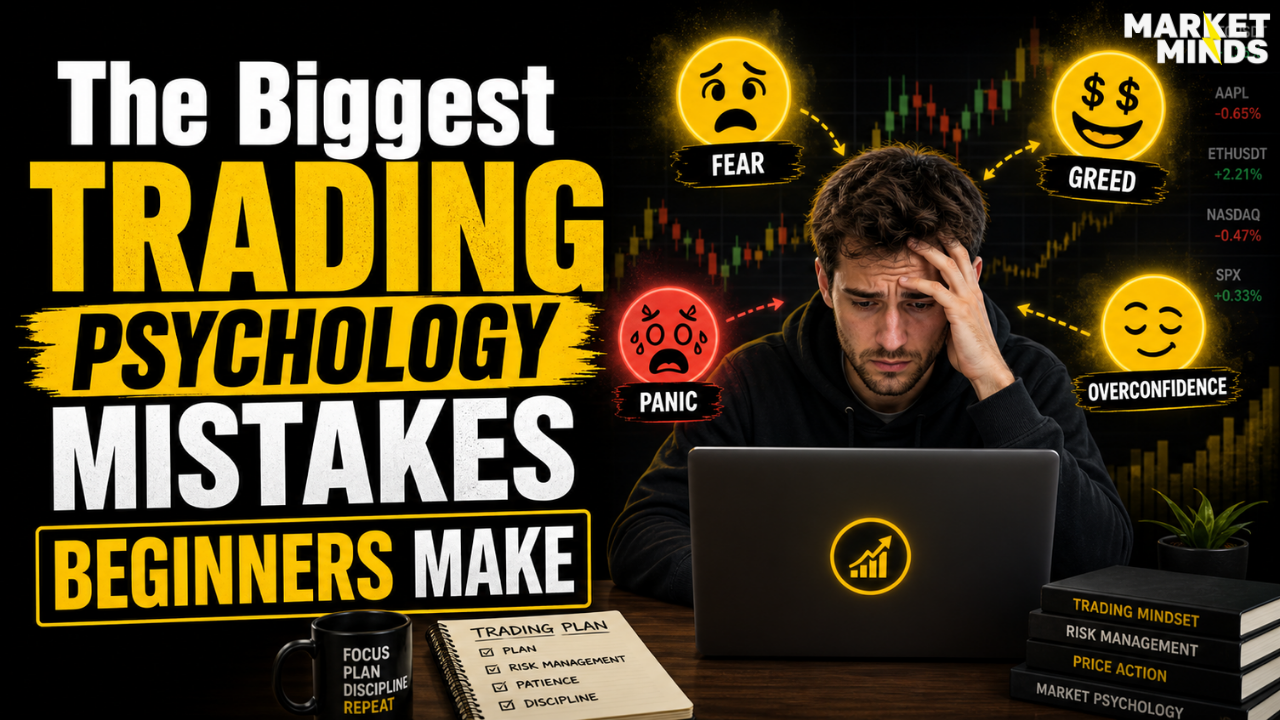
The Biggest Trading Psychology Mistakes Beginners Make | 新手交易者最常犯的心理错误

Many new traders believe that success comes from finding the “perfect strategy.”
许多新手认为,只要找到一套「胜率最高」的交易策略,就能够稳定赚钱。

In reality, most traders don’t fail because of their strategy—they fail because of their psychology.
事实上,大多数交易者失败,并不是因为策略不好,而是因为无法控制自己的情绪。

Even a profitable trading system can produce poor results if emotions take over. 
即使拥有一套优秀的交易系统,如果执行时受到情绪影响,最终依然可能出现亏损。

Understanding common psychological mistakes is one of the first steps toward becoming a more consistent trader.
因此,培养正确的交易心态,往往比学习更多技术分析更加重要。

1. Chasing the Market
害怕错过行情(FOMO)

One of the most common mistakes is entering a trade simply because the market has already made a big move.
最常见的错误之一,看到市场快速上涨时,担心自己错过机会,于是匆忙追高。看到价格快速下跌,又急着追空。

The result is often entering the market just as the trend is coming to an end, thereby assuming higher risk.
结果往往是在行情即将结束时才进场,承担了更高的风险。

The fear of missing out (FOMO) often causes traders to buy near the top or sell near the bottom, leading to poor entry prices and unnecessary losses.
“错失恐惧症”(FOMO)往往会导致交易者在价格高位附近买入或在低位附近卖出,从而造成入场价格不理想以及不必要的损失。

Successful traders understand that there will always be another opportunity. Patience is often more profitable than rushing into a trade.
优秀的交易者知道,市场每天都会有新的机会,不需要为了错过一次行情而失去交易纪律。保持耐心往往比仓促入市交易更有利可图。

2. Refusing to Accept Small Losses
不愿意接受小亏损

Every trader experiences losing trades.
亏损,是交易的一部分。

However, many beginners, unwilling to accept a loss, keep moving their stop-loss orders or even adding to their positions, hoping the price will eventually return to their cost basis.
但许多新手因为不愿意认赔,不断移动停损,甚至不断加码,希望价格最终能够回到自己的成本。

A small loss could have been controlled, but because of a reluctance to face it, it ultimately turned into an irreversible, massive loss.
小亏损本来可以控制,但因为迟迟不愿意面对,最后变成了无法挽回的大亏损。

The difference is that experienced traders accept small losses as part of the business, while beginners often hold onto losing positions hoping the market will turn around.
区别在于,专业的交易者将小额亏损视为交易的一部分,而新手往往死守亏损仓位,寄希望于市场能够反转。

3. Overtrading
过度交易

Many beginners believe that more trades equal more profits.
很多人认为,只要交易次数越多,就越容易赚钱。

In reality, taking too many low-quality trades often leads to higher costs, emotional fatigue, and inconsistent performance.
事实上,频繁交易不仅增加交易成本,也更容易让情绪影响判断。

Professional traders understand that waiting for high-probability setups is usually more effective than constantly being in the market.
真正稳定获利的交易者,并不会每天都进场。他们更愿意耐心等待符合自己交易计划的机会。

4. Letting Emotions Control Decisions
让情绪决定交易

Fear can stop traders from taking good opportunities.
恐惧可能会阻碍交易者把握良机。

Afraid of a market rebound, scared to enter the market.
害怕亏损,所以不敢进场。

Eager to lock in profits after making just a small gain.
赚一点就急着获利了结。

Greed can tempt traders to risk too much.

Revenge trading after a loss can lead to even bigger mistakes.
贪婪会诱使交易者冒太大的风险。亏损之后想马上赚回来,于是开始报复性交易。

These behaviors are almost all major reasons for trading failures.
这些行为,几乎都是交易失败的重要原因。

The market doesn’t reward emotional decisions—it rewards disciplined execution.
市场不会奖励情绪,而是奖励纪律。

Having a trading plan is important, but following it consistently is even more important.
拥有交易计划固然重要,坚持执行交易计划更重要。

5. Focusing Only on Profits while Ignoring the Process
只关注赚钱,而忽略过程

Many beginners judge:
很多新手只会问:

“Did we make a profit on this deal?”
「这一单赚了吗?」

But Professional traders judge:
但专业交易者更在意的是:

“Did you execute this trade according to the trading plan?”
「这一单有没有按照自己的计划执行?」

Making a profit on a trade does not mean the decision was correct, nor does a loss mean the trade was a failure.
交易获利,不代表决策正确;一笔交易亏损,也不代表交易失败。

A well-executed trade can still lose money, while a poorly planned trade can sometimes make money simply by luck.
执行良好的交易仍然可能会亏损,而计划不周的交易有时可能仅仅靠运气就能赚钱。

What truly matters is the ability to execute according to your own system every time.
真正重要的是,每一次都能够按照自己的系统去执行。

In the long run, consistency in decision-making matters far more than the outcome of any single trade. Only the right process can bring stable results.
长期下来,决策的一致性远比单次交易的结果更为重要。正确的过程,才会带来稳定的结果。

Developing a Strong Trading Mindset
如何建立正确的交易心态?

改善心态并非一朝一夕之功,但你可以从这几个简单的习惯开始:

  • Create a trading plan before entering any position.
    每次进场前,先制定交易计划。
  • Define your risk before thinking about potential profit.
    先决定愿意承担多少风险,再考虑可以赚多少钱。
  • Accept that losses are a normal part of trading.
    接受亏损是交易的一部分。
  • Keep a trading journal to review both your decisions and your emotions.
    建立交易日志,记录自己的决策与情绪。
  • Focus on long-term consistency instead of short-term results.
    专注长期成长,而不是每一天的盈亏。

Final Thoughts
总结

Markets will always be unpredictable.
市场永远充满不确定性。

Your emotions don’t have to be.
但你的交易心态,可以越来越稳定。

The traders who succeed over the long run are rarely the ones with the most complicated strategies. More often, they are the ones who remain disciplined, manage risk carefully, and stay consistent regardless of market conditions.
真正长期成功的交易者,并不是拥有最复杂的策略,而是能够保持纪律、控制风险,并持续做出正确决策的人。

Master your psychology, and you’ll give yourself a much better chance of mastering the markets.
当你学会控制情绪,市场也会开始回报你的耐心与坚持。

Logout