

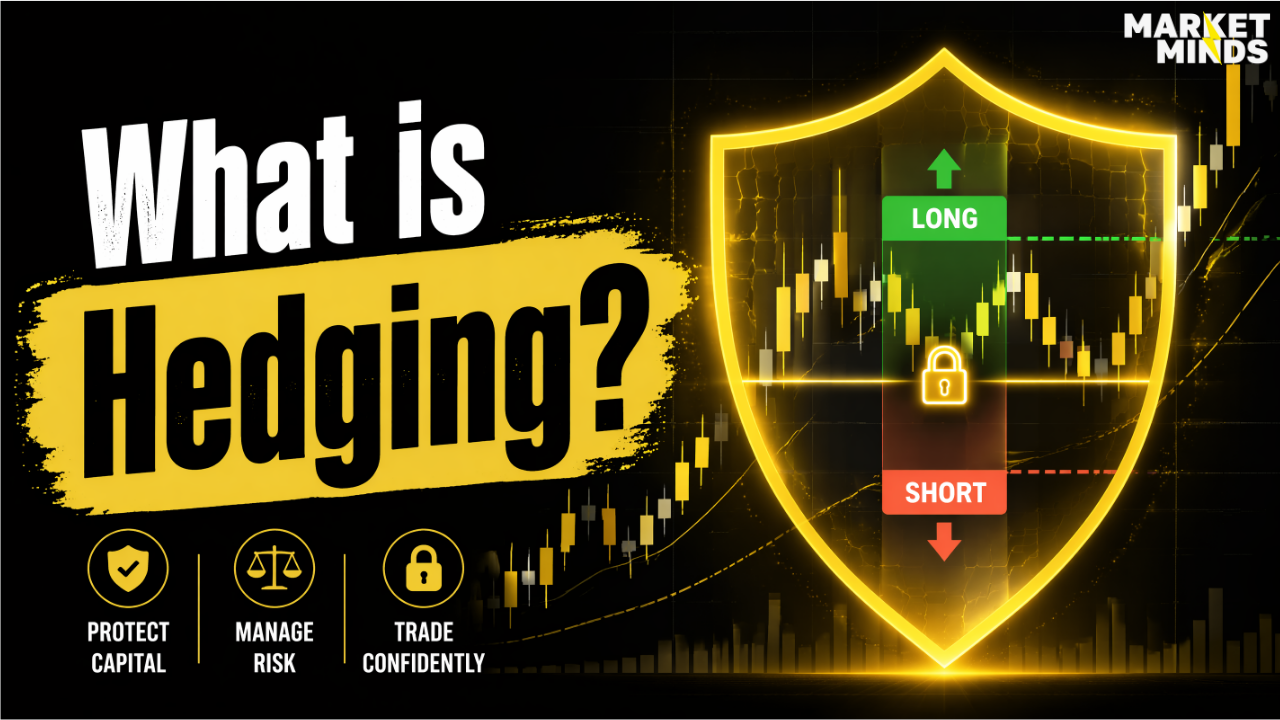
When people hear the word hedging, they often think it sounds complicated or only suitable for professionals.
In reality, hedging is simply a way of managing risk.
Imagine you’re driving a car. Wearing a seatbelt doesn’t mean you’re expecting an accident—it simply means you’re prepared if something unexpected happens.
Trading works the same way.
Markets can move quickly due to economic news, geopolitical events, or sudden changes in investor sentiment. Even experienced traders cannot predict every market movement with perfect accuracy.
That’s where hedging comes in.
What Is Hedging?
Hedging is the practice of opening positions or using financial instruments that help reduce the impact of unfavorable market movements.
Instead of relying solely on being right every time, hedging focuses on protecting capital when the market behaves differently than expected.
The goal isn’t to eliminate risk completely—because no strategy can—but to manage risk in a more structured and disciplined way.
Why Do Professional Traders Hedge?
Professional traders understand one important principle:
Protecting your capital is just as important as making profits.
A good trader thinks beyond today’s trade. They focus on staying in the game over the long term.
By controlling risk, traders can avoid large drawdowns and maintain consistency through different market conditions.
Is Hedging Risk-Free?
No.
Like every trading strategy, hedging has its own advantages and limitations.
If used incorrectly, it can increase costs, reduce profits, or make a trading plan unnecessarily complicated.
That’s why successful hedging requires proper planning, clear rules, and good risk management—not simply opening opposite positions.
Final Thoughts
Trading is not about predicting the future perfectly.
It’s about making informed decisions, managing risk, and remaining disciplined over time.
Hedging is one of many tools that traders use to protect themselves from uncertainty. When combined with sound risk management and a well-defined trading plan, it can become an important part of a long-term trading approach.
Remember: the goal isn’t to avoid every loss—it’s to survive long enough to benefit from your winning opportunities.